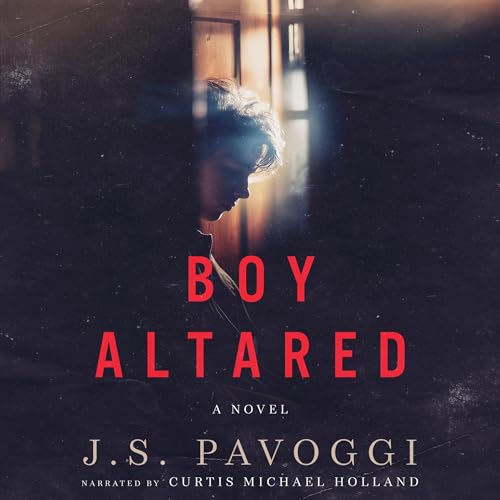
Boy Altared explores themes of memory, secrecy, resilience, and personal development in religious settings, focusing on the tension between innocence and experience without explicit detail. The novel follows Jamie’s growth during the late 1960s, set against pivotal events like the Manson murders, moon landing, Woodstock, the Stonewall riots, the Vietnam War, and the Civil Rights Movement. Guided by Father Nelson and Harry, Jamie faces challenges within the church that mirror broader societal changes. Influences such as Woodstock and civil rights protests shape his views on freedom and authority, informing his ethical perspective. By grounding Jamie’s journey in historical milestones, the story highlights generational shifts and the complexities of maturation
This is such an original and thought-provoking literary fiction coming-of-age story! Even though it follows a 12-year-old boy (Jamie) over 1969 and 1970, it’s more suitable for adult readers as it has unsettling, thought-provoking themes, including sexual abuse, religious control, patriarchal family structure, trauma, and dissociation. The story gives you an accurate look at traditional Catholic American households of the time when authority and obedience shaped everything—so if you didn’t grow up in that era, be prepared to be surprised and horrified by how some of the adults behave!
The story follows a single timeline beginning in 1969 as Jamie moves into seventh grade. He’s such an interesting protagonist—you can immediately tell he’s intelligent and more introspective than his parents or siblings, especially in how he analyzes everything. But because of a past trauma, he often retreats into his mind when things get overwhelming, which makes him an unreliable narrator—and you have to read between the lines to understand what’s actually happening in some unsettling scenes. His confession to a “seemingly benevolent” Father Nelson is what sets the story in motion—and leads him to become an altar boy at St. Peter and Paul’s Church. As the next year unfolds, his life at the church and school collides with major events—Woodstock, the moon landing, the Vietnam War, and Alcatraz—and he even has real-life encounters with Charles Manson and Janis Joplin—totally unbelievable but very interesting to read! Jamie’s relationship with Father Nelson and the church is the heart of the story. Like me, you may have strong emotional reactions during scenes where Jamie is taken advantage of, silenced, and sadly abused. It really puts on display the abuse of power, suppression of truth, and forced silence that was commonplace at the time.
The pacing is good throughout, and the short chapters with clever titles reflecting either family events, significant experiences for Jamie, or historical moments like “Woodstock” or the “Vietnam Draft Lottery” help to keep you engaged and intrigued for what’s coming. Jamie’s family dynamics are also a major part of the story, and they’ll pull at your heartstrings—there’s so much nostalgia in his Saturday mornings with his brothers and secret outings with his sisters that almost anyone can relate to. And his mother, although rigid in her traditional Catholic beliefs and very naive to what’s happening with her son, is hard to find fault with as she shows such love for her children.
The tension really escalates after Jamie experiences a major loss that slowly forces him to snap out of his constant dissociation and bravely push back—but as you can imagine in those days, pushing back was far from easy and often led to more silencing. The ending will stay with you and leave you reflecting on the abuses of power we still see today. For these reasons, this book is a great option for a book club, as you’ll have plenty to discuss throughout and afterwards!
Narrator Performance
The audiobook of Boy Altared is read by award-winning narrator Curtis Michael Holland. He portrays protagonist (seventh-grader) Jamie with a youthful, thoughtful voice that often sounds slightly distant, really emphasizing his intelligence and introspective nature. Holland also makes the character’s tendency to dissociate, as a result of past trauma, very apparent—especially in scenes with Father Nelson, where the shift in awareness is very vivid and is quite emotional to listen to. The moments where Jamie retreats into his mind and speaks to his imaginary friend Kevin are narrated with such emotional depth that makes you really empathize with him.
Holland gives a dynamic performance for Father Nelson—his voice sounds warm, authoritative, and welcoming around Jamie’s family and the church community, but in private moments with Jamie and Harry (the other altar boy), Holland makes him sound much colder and even menacing at times. The delivery makes the character unlikable but also a realistic figure of that era who abused his power.
A major highlight of the narration is the exchanges between Jamie and Harry. Holland makes it evident by giving Harry an unstable, often excitable voice that he has emotional issues and later perfectly captures how Jamie doesn’t fully understand what Harry is trying to tell him about Father Nelson—it’s a part of the story that will really pull at your heartstrings!
Holland also does an excellent job giving distinct voices to secondary characters—Jamie’s mother, his many siblings, the nuns/teachers at school, and all the figures he encounters (Janis Joplin, Charles Manson, and more) are given voices and speech patterns that reflect the late 1960s and early 1970s era, making the listening experience very immersive!
Holland also paces the story well, moving through chapters that each show different experiences Jamie has over the year seamlessly. By the end, Jamie’s growth is noticeable in Holland’s delivery—after a loss and a need to bring truth to light, Holland gives him a voice that sounds braver, more resilient, and less disconnected, which is heartwarming and satisfying—and you’ll be left thinking about this audiobook long afterwards!
Narrator Performance
The audiobook of Boy Altared is read by award-winning narrator Curtis Michael Holland. He portrays protagonist (seventh-grader) Jamie with a youthful, thoughtful voice that often sounds slightly distant, really emphasizing his intelligence and introspective nature. Holland also makes the character’s tendency to dissociate, as a result of past trauma, very apparent—especially in scenes with Father Nelson, where the shift in awareness is very vivid and is quite emotional to listen to. The moments where Jamie retreats into his mind and speaks to his imaginary friend Kevin are narrated with such emotional depth that makes you really empathize with him.
Holland gives a dynamic performance for Father Nelson—his voice sounds warm, authoritative, and welcoming around Jamie’s family and the church community, but in private moments with Jamie and Harry (the other altar boy), Holland makes him sound much colder and even menacing at times. The delivery makes the character unlikable but also a realistic figure of that era who abused his power.
A major highlight of the narration is the exchanges between Jamie and Harry. Holland makes it evident by giving Harry an unstable, often excitable voice that he has emotional issues and later perfectly captures how Jamie doesn’t fully understand what Harry is trying to tell him about Father Nelson—it’s a part of the story that will really pull at your heartstrings!
Holland also does an excellent job giving distinct voices to secondary characters—Jamie’s mother, his many siblings, the nuns/teachers at school, and all the figures he encounters (Janis Joplin, Charles Manson, and more) are given voices and speech patterns that reflect the late 1960s and early 1970s era, making the listening experience very immersive!
Holland also paces the story well, moving through chapters that each show different experiences Jamie has over the year seamlessly. By the end, Jamie’s growth is noticeable in Holland’s delivery—after a loss and a need to bring truth to light, Holland gives him a voice that sounds braver, more resilient, and less disconnected, which is heartwarming and satisfying—and you’ll be left thinking about this audiobook long afterwards!
The audiobook of Boy Altared is read by award-winning narrator Curtis Michael Holland. He portrays protagonist (seventh-grader) Jamie with a youthful, thoughtful voice that often sounds slightly distant, really emphasizing his intelligence and introspective nature. Holland also makes the character’s tendency to dissociate, as a result of past trauma, very apparent—especially in scenes with Father Nelson, where the shift in awareness is very vivid and is quite emotional to listen to. The moments where Jamie retreats into his mind and speaks to his imaginary friend Kevin are narrated with such emotional depth that makes you really empathize with him.
Holland gives a dynamic performance for Father Nelson—his voice sounds warm, authoritative, and welcoming around Jamie’s family and the church community, but in private moments with Jamie and Harry (the other altar boy), Holland makes him sound much colder and even menacing at times. The delivery makes the character unlikable but also a realistic figure of that era who abused his power.
A major highlight of the narration is the exchanges between Jamie and Harry. Holland makes it evident by giving Harry an unstable, often excitable voice that he has emotional issues and later perfectly captures how Jamie doesn’t fully understand what Harry is trying to tell him about Father Nelson—it’s a part of the story that will really pull at your heartstrings!
Holland also does an excellent job giving distinct voices to secondary characters—Jamie’s mother, his many siblings, the nuns/teachers at school, and all the figures he encounters (Janis Joplin, Charles Manson, and more) are given voices and speech patterns that reflect the late 1960s and early 1970s era, making the listening experience very immersive!
Holland also paces the story well, moving through chapters that each show different experiences Jamie has over the year seamlessly. By the end, Jamie’s growth is noticeable in Holland’s delivery—after a loss and a need to bring truth to light, Holland gives him a voice that sounds braver, more resilient, and less disconnected, which is heartwarming and satisfying—and you’ll be left thinking about this audiobook long afterwards!