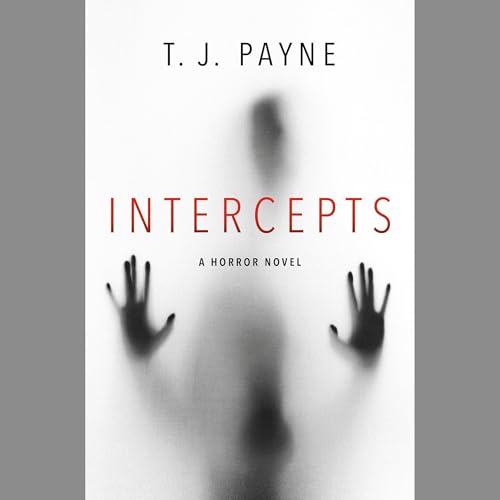
Joe works for an organization known only as “The Company.” He cannot speak about what he does in public. He and his employees live in a constant state of paranoia that The Company is listening to their phones and watching their search histories. Why? Because on the bottom floor of the facility, rows of padded cells keep a group of humans in a constant state of extreme sensory deprivation. With their minds awake but their senses unable to ground themselves, they have gone insane, oscillating between vegetative states and fits of violent rage.
These experiments have a purpose, though—when the minds of these inmates transcend their physical selves, they’re able to “intercept” the sights and senses of anyone in the world. The process, however, is painful. Torturous.
Joe likes to think that his work, helping the government track down bad guys, makes the world a better place. He has no regrets. Until the day when his ex-wife dies by suicide. He learns that a woman who looks very much like one of Joe’s inmates had been haunting her. After his ex-wife’s death, Joe’s daughter Riley comes to live with him. And then she begins to have visions of the woman too…
Has Joe somehow played a role in turning the government’s most sinister weapon against his own daughter? And, most important of all: how far will he go to save her?
This is one of the most original, high-concept books I’ve read in a while! It was originally self-published by T.J. Payne in 2019, became a BookTok hit, and was recently picked up by Crown for wider release. It’s so impressive that this was his debut—I’ll definitely be looking into his backlist. While it’s marketed as horror and does include psychological horror and gory scenes, it reads more like a high-stakes thriller. Sensitive readers should be aware of triggers here—medical experimentation on humans, psychological distress, and graphic body horror.
The story is told through multiple POVs, primarily Joe and his daughter Riley, but also other staff members working within the facility that Joe supervises. Right from the start, it’s clear that most of the adult characters are morally compromised—often veering into morally black territory. The disturbing opening chapters show what’s being done to the “Antenna” subjects, and I felt completely unsettled reading about their chemically -controlled chambers and how they were stripped of their autonomy. There are also some deeply unsettling scenes involving a subject named Bishop being “tuned” in an effort to “intercept” intelligence—definitely not for the faint of heart!
There’s a gradual reveal of what “intercepts” are—and how antennas can infiltrate minds, manipulate perception, and even project hallucinations. But by the end, I still couldn’t fully wrap my head around how they were able to do these things, and I would have liked more explanation of the mechanics. It’s important to know that this book is also very much about a fractured family—Joe tries to reconnect with his estranged daughter Riley after her mother’s death, but the nightmare unfolding at work comes crashing down on them.
The pacing is excellent—every scene serves a purpose, either pushing the plot forward or giving more insight as to what’s really happening at the facility. There are action scenes throughout, but the climax has some especially disturbing and gory moments—and I wouldn’t suggest reading them before bed! There are also some decent twists, although certain elements of the ending are foreshadowed early on. The ending has a nice balance of resolution (for the characters you may be rooting for) and lingering unease—and even frustration—about the future of the experiments. The book isn’t long at just over 300 pages, but it’s intentionally structured to make you feel creeped out and unsettled afterwards—and if you love books like that, grab a copy ASAP!
Narrator Performance
The audiobook of Intercepts is narrated by award-winning narrator Joe Hempel, who’s renowned for his work in horror.
Hempel portrays Joe with a controlled, grounded tone that really shows off his moral ambiguity. In his dialogue and inner monologues, you can clearly hear the character’s detachment and justification for the work he’s doing. His performance doesn’t make Joe likeable, especially at first, but it’s a dynamic performance that makes the character feel multidimensional. When Joe is forced to confront the danger his daughter Riley is in, Hempel shifts his tone to add just enough urgency, fear, and something more human to make the character compelling. You get the sense that despite his flaws, he’s still a father who will do anything to protect his daughter!
Hempel also gives distinct voices to the facility staff, including Hannah, who comes across as the most likeable, but most are given desensitised, clinical tones that sound disturbingly casual about what they’re doing to the Antennas—and you’ll find them difficult to empathise with when things go wrong. There are several graphic body horror scenes, and Hempel’s delivery keeps you on edge the entire time—not the scenes you want to listen to before bed, but incredibly effective!
Hempel portrays Riley with a more fragile, emotionally reactive voice that captures her unraveling mind. As she becomes targeted and starts experiencing hallucinations and visions, Hempel shifts her tone from confusion to fear and panic—and her distress feels real, making it easy for you to empathise with her. In the final act, Hempel delivers the climactic scenes with terrifying intensity—you’ll be holding your breath the whole time and feel relieved when it’s over, in the best way. You’ll definitely feel unsettled and maybe even a little creeped out after this one—the true sign of a great horror audiobook performance!
Narrator Performance
The audiobook of Intercepts is narrated by award-winning narrator Joe Hempel, who’s renowned for his work in horror.
Hempel portrays Joe with a controlled, grounded tone that really shows off his moral ambiguity. In his dialogue and inner monologues, you can clearly hear the character’s detachment and justification for the work he’s doing. His performance doesn’t make Joe likeable, especially at first, but it’s a dynamic performance that makes the character feel multidimensional. When Joe is forced to confront the danger his daughter Riley is in, Hempel shifts his tone to add just enough urgency, fear, and something more human to make the character compelling. You get the sense that despite his flaws, he’s still a father who will do anything to protect his daughter!
Hempel also gives distinct voices to the facility staff, including Hannah, who comes across as the most likeable, but most are given desensitised, clinical tones that sound disturbingly casual about what they’re doing to the Antennas—and you’ll find them difficult to empathise with when things go wrong. There are several graphic body horror scenes, and Hempel’s delivery keeps you on edge the entire time—not the scenes you want to listen to before bed, but incredibly effective!
Hempel portrays Riley with a more fragile, emotionally reactive voice that captures her unraveling mind. As she becomes targeted and starts experiencing hallucinations and visions, Hempel shifts her tone from confusion to fear and panic—and her distress feels real, making it easy for you to empathise with her. In the final act, Hempel delivers the climactic scenes with terrifying intensity—you’ll be holding your breath the whole time and feel relieved when it’s over, in the best way. You’ll definitely feel unsettled and maybe even a little creeped out after this one—the true sign of a great horror audiobook performance!
The audiobook of Intercepts is narrated by award-winning narrator Joe Hempel, who’s renowned for his work in horror.
Hempel portrays Joe with a controlled, grounded tone that really shows off his moral ambiguity. In his dialogue and inner monologues, you can clearly hear the character’s detachment and justification for the work he’s doing. His performance doesn’t make Joe likeable, especially at first, but it’s a dynamic performance that makes the character feel multidimensional. When Joe is forced to confront the danger his daughter Riley is in, Hempel shifts his tone to add just enough urgency, fear, and something more human to make the character compelling. You get the sense that despite his flaws, he’s still a father who will do anything to protect his daughter!
Hempel also gives distinct voices to the facility staff, including Hannah, who comes across as the most likeable, but most are given desensitised, clinical tones that sound disturbingly casual about what they’re doing to the Antennas—and you’ll find them difficult to empathise with when things go wrong. There are several graphic body horror scenes, and Hempel’s delivery keeps you on edge the entire time—not the scenes you want to listen to before bed, but incredibly effective!
Hempel portrays Riley with a more fragile, emotionally reactive voice that captures her unraveling mind. As she becomes targeted and starts experiencing hallucinations and visions, Hempel shifts her tone from confusion to fear and panic—and her distress feels real, making it easy for you to empathise with her. In the final act, Hempel delivers the climactic scenes with terrifying intensity—you’ll be holding your breath the whole time and feel relieved when it’s over, in the best way. You’ll definitely feel unsettled and maybe even a little creeped out after this one—the true sign of a great horror audiobook performance!